Species guide
What we commonly spot on our walks, what makes each one worth a closer look, and which ones deserve extra caution to even touch.
Real finds from real walks, identified as best we could from photos alone. A few we're confident about. A few we're honestly not, and we're leaving them that way rather than guessing, which is exactly the habit this whole guide is trying to build.
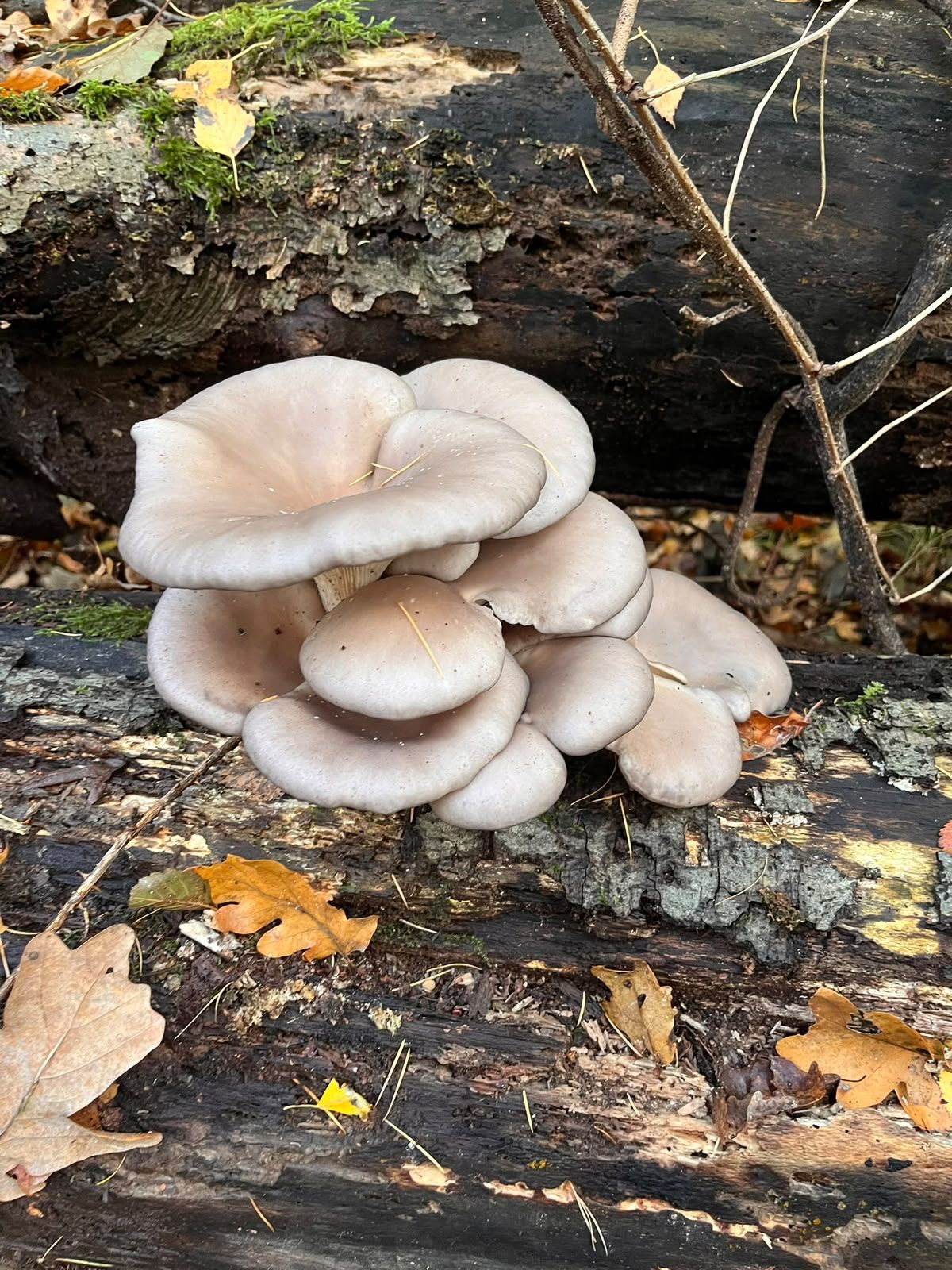
Oyster mushroom
Pleurotus ostreatus
Smooth, fan or shell-shaped caps in blue-gray to tan, growing in overlapping shelf-like clusters on dead or dying hardwood. One of the more confident IDs on this page, the shape and growth habit are pretty distinctive.
Confident ID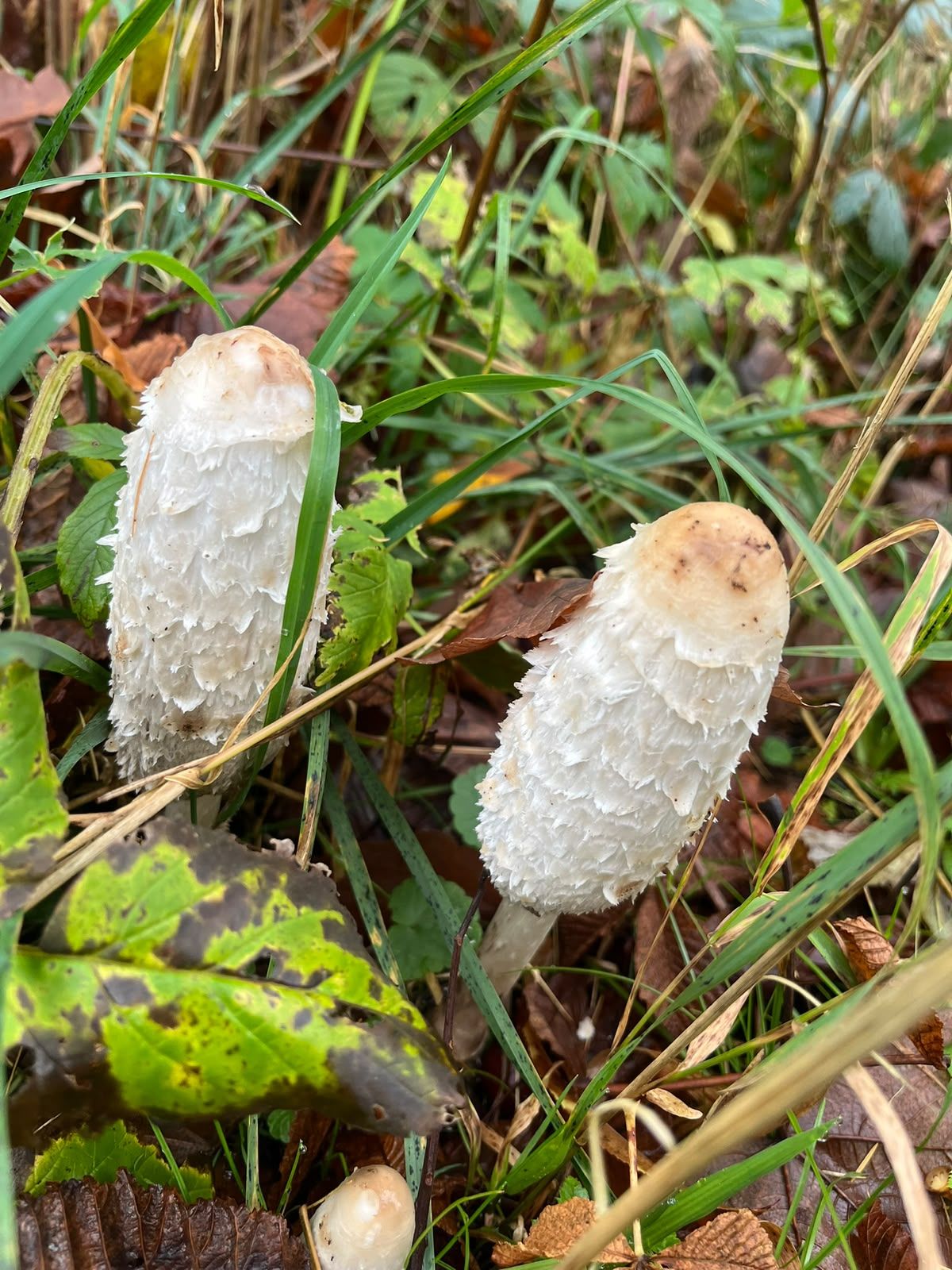
Shaggy ink cap
Coprinus comatus
Tall, cylindrical, shaggy white caps that look almost like they're wearing fur. Left long enough, the cap dissolves into black ink from the bottom up, a genuinely strange process to see in person.
Confident ID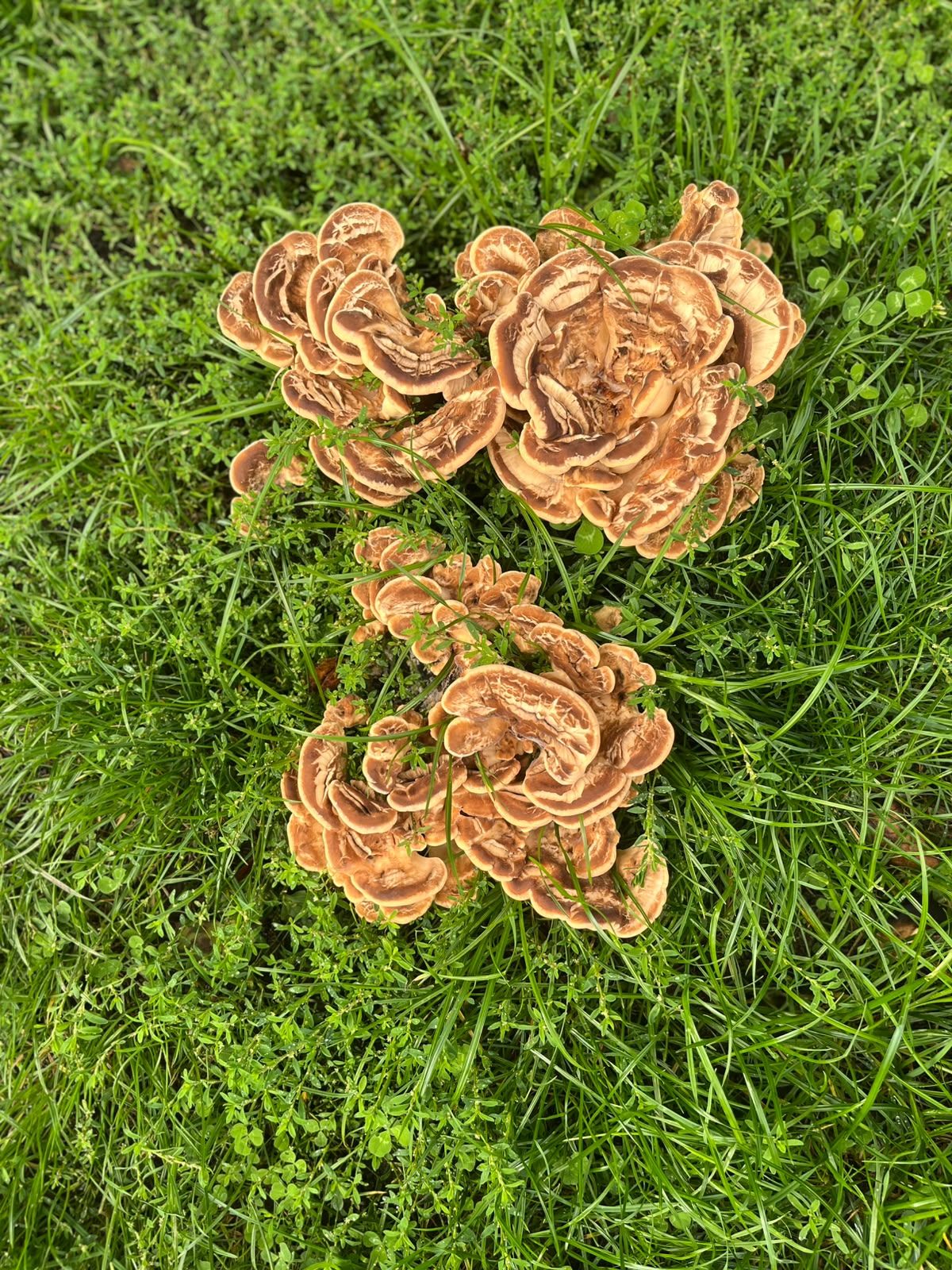
Giant polypore (probable)
Meripilus giganteus
A huge rosette of overlapping, wavy fans growing at the base of a tree, usually beech. The size and growth pattern point strongly to this species, though we're stopping short of calling it fully confirmed.
Probable, not certain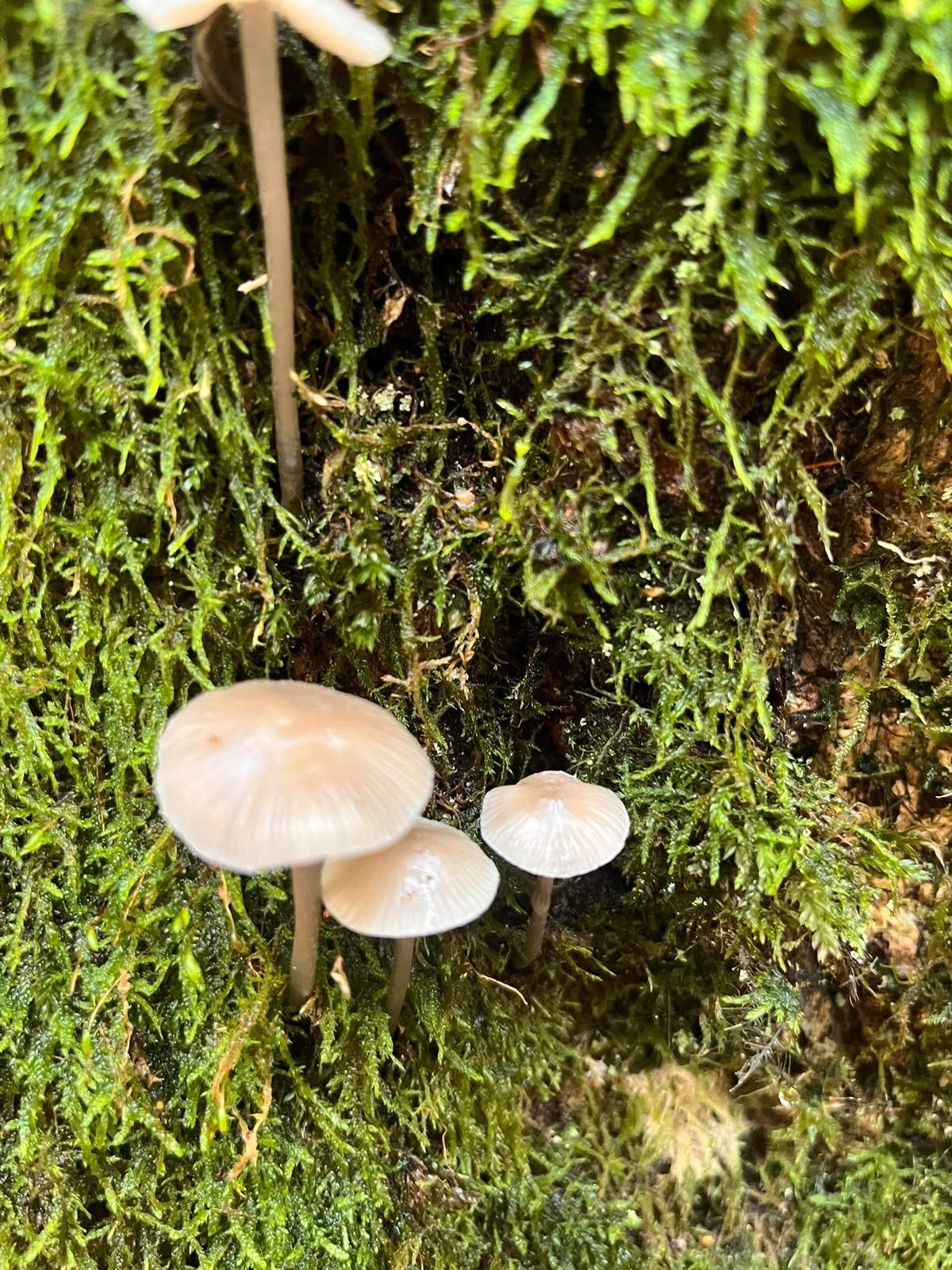
A bonnet (genus only)
Mycena sp.
Small, delicate, bell-shaped caps with fine radial ribbing, growing on moss and old wood. Mycena is a huge genus and most species need a microscope to tell apart, so this one stays at "some kind of Mycena."
Genus only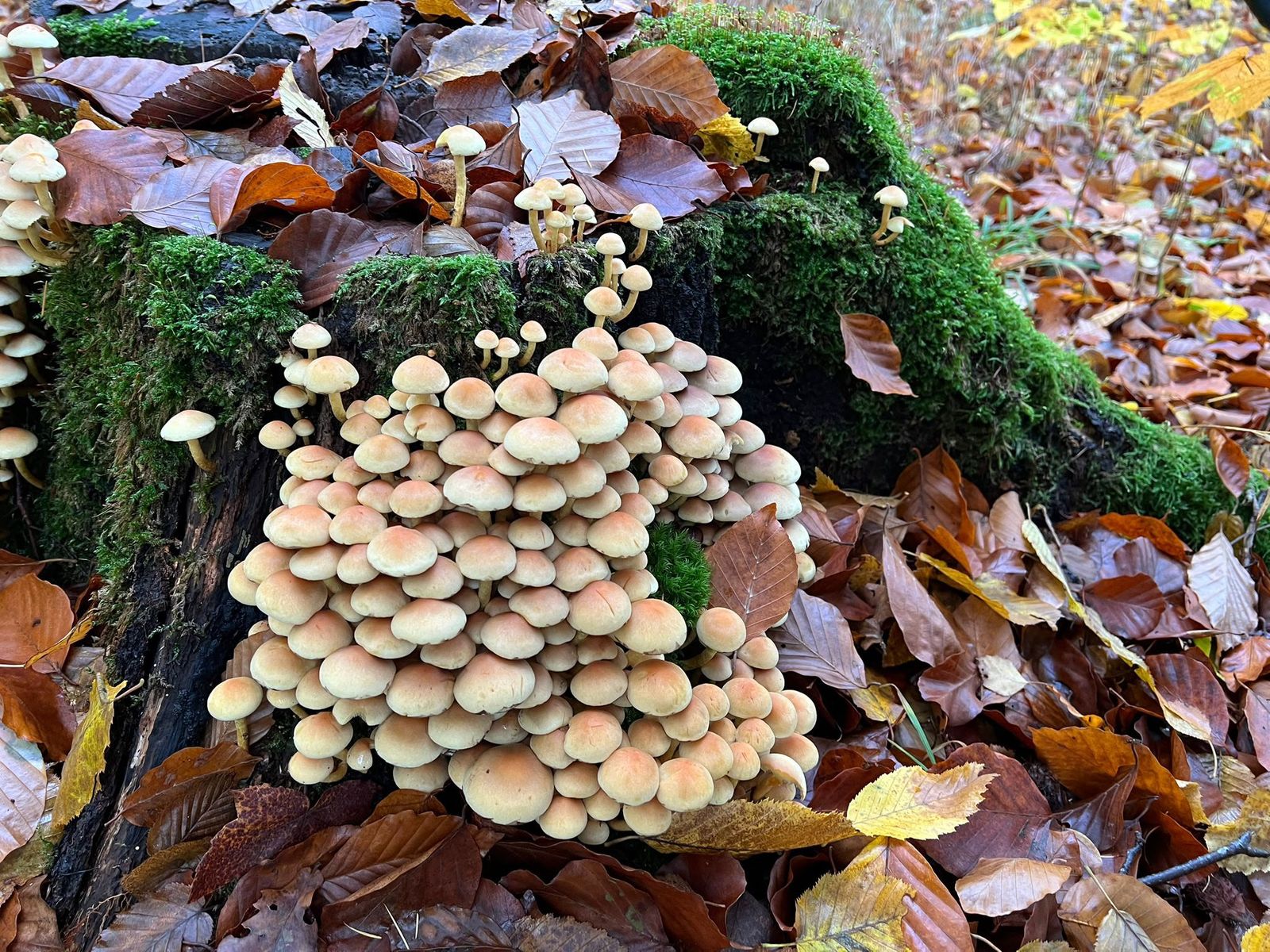
Woodtuft-type cluster
Possibly Kuehneromyces mutabilis
Dense clusters of small, honey-brown, two-toned caps on dead wood. This is very likely sheathed woodtuft, a genuinely edible species, but it has a notorious lookalike: the deadly Galerina marginata, which can grow in nearly identical clusters and is extremely difficult to tell apart without spore prints and a lot of experience. This pairing is a big part of why the rule on this site is simple: we photograph, we never pick.
Dangerous lookalike, admire only